The Evolution of Shoe Fitting: From Barleycorns to Modern Footwear

Updated: Jul 15

The history of shoe fitting is also the history of how humans learned to measure, shape, and mass-produce footwear for changing societies. From early handmade shoes to today’s comfort-focused designs, footwear has evolved in function, accessibility, and style, yet fit remains one of the most persistent challenges.
Early measuring systems
One of the oldest concepts in shoe sizing is the barleycorn, a traditional unit that helped shape English shoe measurement systems. As footwear moved from purely handcrafted production toward more systematic sizing, the barleycorn became a practical way to standardize shoe sizes. However, this early approach remained only a rough form of standardization and did not fully reflect the complexity of human foot shape.

Handcraft and Privilege
Before industrialization, footwear was largely handmade and therefore expensive, making custom shoes more accessible to privileged groups than to the general public. Shoemakers could adapt footwear more closely to the wearer, but production was slow and limited. In many cases, shoes were still made on simple or symmetrical lasts, with limited consideration for the anatomical differences between the left and right foot.

From Symmetry to Anatomy
For many years, shoes were not fully designed as distinct left and right pairs, and wearers were often expected to adapt to the shoe rather than the other way around. This gradually changed as shoemaking techniques and fitting knowledge evolved. The transition from symmetrical lasts to more anatomical designs marked an important step toward improved comfort and function.

Industrialization with Mass Production and Change in Shoe Fitting
Industrialization transformed footwear production by making shoes faster to manufacture, more widely available, and more affordable. This shift greatly expanded access to footwear across society. However, standardization moddified shoe fitting process. It reduced some of the flexibility previously available in handmade shoemaking, making it more difficult to accommodate the wide variety of human foot shapes.
Modern Comfort and Fashion
Today’s footwear benefits from major advances in materials, cushioning, breathability, lightness, and style. Modern shoes can be more comfortable, functional, and fashionable than earlier generations of footwear. However, improvements in comfort do not automatically guarantee better fit, because fit still depends heavily on last design, internal volume, and width accommodation.
The limits of measurement
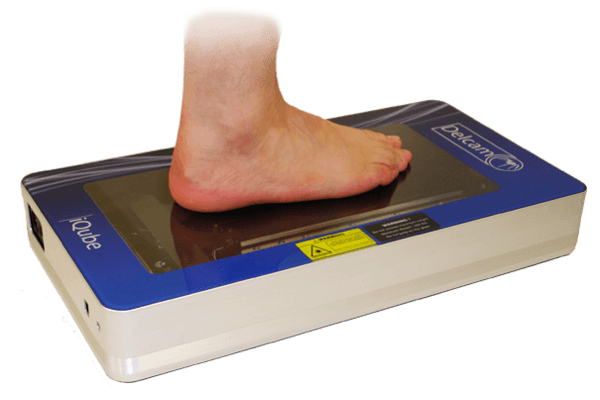
Foot measurement tools have become increasingly sophisticated, but measurement alone does not solve shoe-fitting problems. A correct foot measurement does not necessarily guarantee a correct shoe outcome if last shape, width options, and internal geometry remain too limited. In other words, better measurement is valuable, but it must be supported by better footwear design and more appropriate sizing systems.
Why Fit still matters
Fit is not a minor detail. Research shows that incorrectly fitted footwear is associated with foot pain and foot disorders, and that a substantial proportion of people wear shoes that do not properly accommodate their foot length or width. Ill-fitting footwear has also been linked to structural problems such as hallux valgus, lesser toe deformities, corns, and calluses.
The Question Today
Given this history, the question today is not only how shoes became more available and comfortable, but how footwear design can better accommodate the full diversity of human foot shapes. Improved measurement helps, but true fit still depends on last design, width accommodation, and the relationship between the shoe and the living foot.
References:
The Metropolitan Museum of Art. Shoes in The Costume Institute.
ISO 9407:2019 Footwear sizing — Mondopoint system
Banwell, H. A., et al. Incorrectly fitted footwear, foot pain and foot disorders: a systematic search and narrative review of the literature.
Menz, H. B., & Bonanno, D. R. Footwear comfort: a systematic search and narrative synthesis of the literature.


Comments